


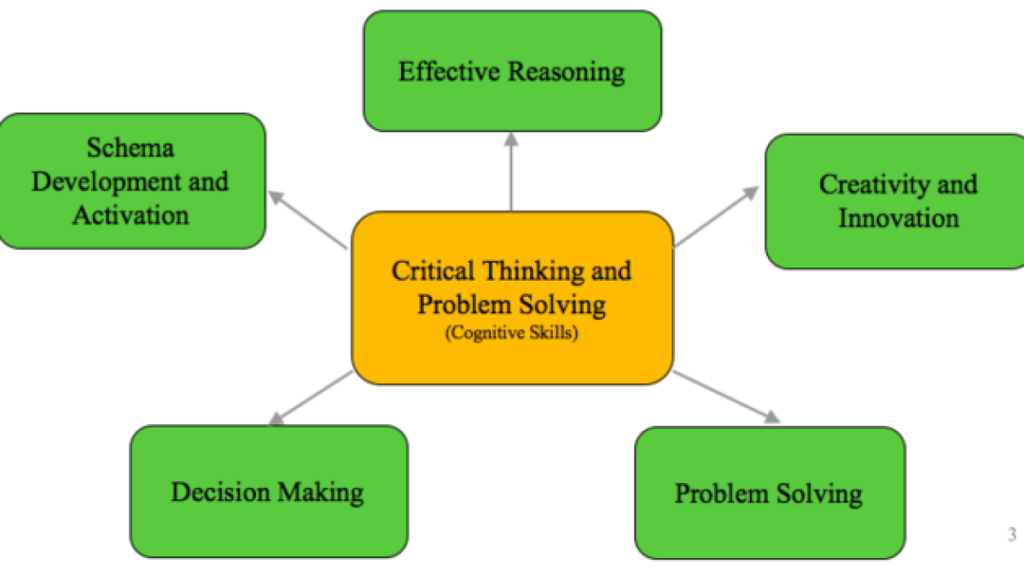
Public education plays a fundamental role in shaping young minds and preparing them for life. But a pressing question remains: does public education teach critical thinking and argumentative thinking? While schools aim to build foundational skills, there is ongoing debate about how effectively they foster critical and argumentative thinking abilities. Let’s delve deeper into this topic to understand how schools handle these crucial cognitive skills.
What Is Critical Thinking and Why Does It Matter?
Critical thinking is the ability to analyze, evaluate, and interpret information to form reasoned conclusions. It involves questioning assumptions, weighing evidence, and solving problems logically. In essence, critical thinking equips individuals to make sound decisions in their personal and professional lives.
Critical thinking matters because it helps students navigate the complexities of the modern world. Whether it’s making informed choices, understanding different perspectives, or identifying biases in information, critical thinking is a cornerstone of lifelong learning and success. Without it, individuals may struggle to differentiate facts from opinions or fall victim to misinformation.
How Does Critical Thinking Help Students in Real Life?
In real life, critical thinking enables students to approach challenges with clarity and confidence. For instance, when solving complex math problems or analyzing a historical event, students use critical thinking to break down issues, consider alternatives, and arrive at logical conclusions.
Furthermore, critical thinking plays a pivotal role in decision-making. When students develop these skills, they are better prepared to handle real-world situations like evaluating job offers, managing personal finances, or even choosing reliable sources for a school project. By fostering critical thinking, schools empower students to become independent problem-solvers and informed citizens.
Why Schools Focus on Thinking Skills
Education systems worldwide emphasize thinking skills because they form the foundation of learning. While traditional teaching methods centered on memorization, modern education recognizes the need for higher-order thinking. Skills like critical and argumentative thinking go beyond rote learning to encourage creativity, collaboration, and innovation.

Moreover, developing thinking skills prepares students for the workforce. In a rapidly changing job market, employers value workers who can adapt, analyze situations, and communicate effectively. As such, schools that prioritize thinking skills ensure students are not just knowledgeable but also equipped for future challenges.
What Is Argumentative Thinking in Education?
Argumentative thinking is the process of building strong, evidence-based opinions while considering opposing viewpoints. It requires students to gather evidence, evaluate different perspectives, and articulate their arguments logically. For example, in a debate class, students engage in argumentative thinking when they defend a position or critique someone else’s viewpoint.
In education, argumentative thinking is essential because it helps students express themselves clearly and confidently. Whether writing an essay or participating in discussions, students use these skills to persuade others and back their opinions with logic and evidence.
Does Public Education Encourage Argumentative Thinking?
Public education encourages argumentative thinking to an extent, but its implementation varies widely. Some schools include debates, persuasive essays, and Socratic seminars in their curriculum, all of which promote argumentative thinking. However, not all classrooms prioritize this skill equally due to curriculum constraints or limited teacher training in facilitating open discussions.
Moreover, certain subjects like English, history, and social studies tend to incorporate argumentative thinking more effectively than others. For example, analyzing a novel’s themes or debating historical events allows students to practice forming and defending arguments. While public education offers opportunities for argumentative thinking, they are not always consistent or comprehensive.
How Argumentative Thinking Builds Strong Opinions
Argumentative thinking enables students to develop well-informed, strong opinions. By engaging with different perspectives, they learn to assess the strengths and weaknesses of various arguments. This skill is particularly important in today’s world, where students are constantly exposed to differing viewpoints on social media, in the news, and in daily interactions.
When students practice argumentative thinking, they become better at distinguishing facts from opinions, identifying biases, and presenting their ideas persuasively. These skills not only enhance academic performance but also prepare students for future roles as active and informed members of society.
Do Schools Teach Students to Question?
One of the core elements of critical thinking is the ability to question. But do schools actively teach this skill? The answer is both yes and no. While some educators encourage students to ask questions, challenge assumptions, and seek deeper understanding, this approach is not universally applied.
In many classrooms, students are taught to follow instructions and memorize facts rather than question information. This is often due to time constraints or the pressure to cover a large syllabus. However, schools that prioritize inquiry-based learning create environments where students feel empowered to question and explore.
Lack of Time for Deep Discussions
One of the biggest challenges in teaching critical thinking and argumentative thinking in public education is the lack of time for deep discussions. Teachers often face tight schedules, leaving little room for open-ended debates or exploratory conversations. Instead, they are required to stick to standardized curricula and prepare students for exams.
This time constraint limits opportunities for students to engage in critical or argumentative thinking. For example, a teacher may have to prioritize teaching key concepts over facilitating a class discussion on a controversial topic. As a result, students miss out on valuable opportunities to develop these essential skills.
How Standardized Tests Affect Thinking Skills
Standardized tests are a major obstacle to teaching critical and argumentative thinking. These exams often prioritize rote memorization and multiple-choice questions over creative or analytical problem-solving. As a result, teachers may focus more on preparing students to pass tests rather than fostering deeper cognitive skills.
For example, a science test may ask students to recall facts rather than design experiments or interpret data. This approach discourages critical thinking because it rewards surface-level understanding rather than deep analysis. Consequently, students may excel at memorization but struggle to apply their knowledge in real-life situations.
Why Critical Thinking Isn’t Taught Everywhere
Despite its importance, critical thinking isn’t taught everywhere due to several barriers. Limited teacher training, rigid curricula, and resource constraints are some of the main reasons. Additionally, some educators may lack the tools or confidence to implement critical thinking strategies effectively in their classrooms.
In low-income schools, limited access to technology or instructional materials can further hinder the teaching of critical thinking. For instance, schools without access to debate clubs, project-based learning, or digital tools may struggle to create engaging, thought-provoking activities. These disparities highlight the need for systemic changes to ensure all students receive quality education in critical thinking.
Examples of Critical Thinking in Education
While challenges exist, there are many examples of critical thinking in action within schools. Here are a few:
- Science experiments: Students design and conduct experiments, analyze results, and draw conclusions.
- Debates: In a history class, students debate the causes and effects of major events.
- Problem-solving tasks: Math classes often encourage students to find multiple ways to solve the same problem.
- Literature analysis: English classes ask students to interpret themes, characters, and author intent in books.
These examples show how schools can integrate critical thinking into various subjects to foster deeper learning.
What Parents Can Do to Help Kids Think Critically
Parents play a crucial role in developing their children’s critical thinking skills. At home, they can encourage curiosity by asking open-ended questions and discussing current events. For example, parents can ask their child, “Why do you think this happened?” or “What would you do differently?”
Additionally, engaging in activities like reading, puzzles, or even family debates can help kids practice critical and argumentative thinking. By fostering an environment of inquiry and dialogue, parents can complement the education their children receive in school.
The Bottom Line
Does public education teach critical thinking and argumentative thinking? The answer is complicated. While some schools and teachers actively foster these skills, systemic challenges such as standardized tests, rigid curricula, and time constraints often hinder their development. Critical and argumentative thinking are essential for preparing students to succeed in real life, but more efforts are needed to integrate them into every classroom.
By addressing these challenges, educators, parents, and policymakers can work together to ensure that all students have the tools they need to think critically, question deeply, and form strong opinions. Public education holds the potential to teach these skills effectively—but it requires a collective commitment to make it a reality.
