


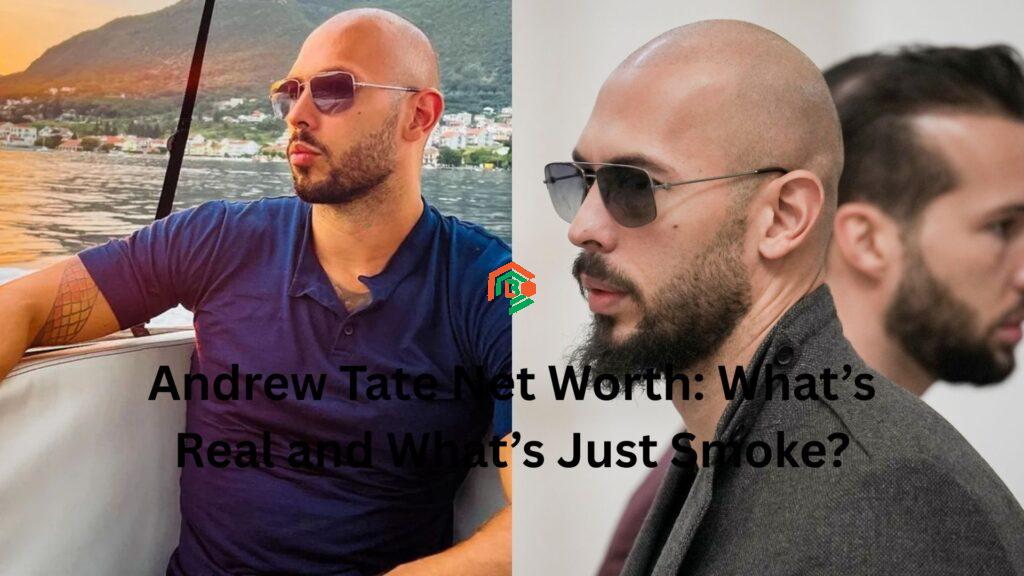
Love him or hate him, Andrew Tate is a name people can’t seem to scroll past. Type his name into Google, and you’re bombarded with hot takes, flashy headlines, and eye-watering numbers. Is he worth $50 million? $300 million? Maybe more? The truth is murkier than his Instagram filters. Let’s unpack the real story behind Andrew Tate’s net worth—what’s solid, what’s questionable, and what’s probably just noise.
The Man Who Turned Controversy Into Currency
Tate didn’t stumble into money by accident. He engineered attention, and attention—especially in the social media age—is currency. But this isn’t a rags-to-riches fairytale with a heartwarming moral. It’s more of a calculated rise, laced with flash, fire, and a whole lot of polarizing opinions.
He started with kickboxing—real physical work, not just a character on the internet. Multiple world championships put him on the map, but kickboxing isn’t exactly a cash cow. Even at the top, fighters often scrape by. Tate himself has said the sport didn’t make him rich. It gave him confidence, discipline, and visibility—but not serious money.
So where did the actual wealth come from?
Hustlers University and the Business of Influence
This is where things get complicated. Tate’s main money-maker? Hustlers University. A paid community promising lessons on making money online. The topics range from crypto and copywriting to drop-shipping and freelancing.
The monthly subscription runs about $49 at the time of writing. That doesn’t sound like much until you factor in the scale. At its peak, he claimed over 100,000 paying members. If true, that’s nearly $5 million a month in revenue. Not profit—there are expenses, staff, affiliates—but even a slice of that is serious coin.
He also used a clever affiliate system. Students promoted his content for a cut. It turned his followers into a self-sustaining hype machine. That’s partly why you’d see Tate’s clips everywhere, whether you searched for him or not.
Was it revolutionary? Maybe. Was it manipulative? Also maybe.
But it worked.
Real Estate, Casinos, and Side Plays
Tate often mentions owning casinos in Romania. Not much has been independently verified, but he claims he partnered with an established operator and now earns a cut of revenue. If true, that’s a cash-heavy, high-margin business. It fits his brand—glamour, risk, power.
He’s also hinted at property investments in Eastern Europe. Romanian real estate isn’t as expensive as Western markets, but the return on investment can be solid. If he bought early, especially during downturns, it’s likely paying off now. But again, the details are murky. There’s no public portfolio to fact-check.
That’s a theme with Tate. He gives numbers, throws out claims, but rarely shows receipts. He’s more concerned with impact than proof.
The Flash and the Flex
Let’s talk about the cars, watches, jets, and suits. A garage full of supercars. Rare Bugattis. Custom-made timepieces. Is it all owned? Leased? Part of the show?
To the average eye, it looks like extreme wealth. To someone familiar with how online personalities work, it raises eyebrows. Renting exotic cars for content is common. Using short-term leases or borrowed assets to build hype? Even more common.
Now, that doesn’t mean Tate’s broke or pretending entirely. It just means not everything flashy is owned outright. He plays the image game, and he plays it well.
Think of it like this: imagine a luxury showroom lets you take photos inside their space. If you post it right, most people assume you own the place. That’s the line Tate walks—leaning into perception to boost his brand.
Is He Really a Multi-Millionaire?
Most signs point to yes.
Just not necessarily the $500 million he’s thrown around in interviews. That number seems inflated—probably intentionally. It keeps people talking. It fits the persona. And let’s be honest: if people think you’re worth half a billion, they treat you differently. Doors open.
But a conservative guess? Somewhere in the $50 to $100 million range wouldn’t be shocking. That includes digital income, brand licensing, course revenue, and whatever offline businesses are real.
Still insanely high. But within the realm of possibility.
The Power of the Persona
Tate isn’t just a businessman. He’s a brand. His value is tightly linked to his visibility. If he vanishes from the public eye, his empire risks collapse. That’s the double-edged sword of being a personality-first entrepreneur.
The more outrageous he gets, the more attention he commands. But too much controversy—and we’ve seen this play out—can trigger bans, legal issues, or outright public rejection. That’s a risk for anyone whose income depends on staying visible and appealing enough to convert followers into buyers.
Let’s take a small hypothetical. Say someone joins Hustlers University because they believe Tate is a real success story. Now imagine a scandal hits, and suddenly that trust cracks. Subscriptions dip. Affiliates pull out. Revenue takes a hit. It’s not just theoretical—it’s happened in pieces already.
So his net worth isn’t just money in the bank. It’s also tied up in reputation, momentum, and perception.
Why His Net Worth Fascinates People So Much
Here’s the core of it: Andrew Tate represents something. To some, he’s the ultimate self-made man—muscles, money, dominance. To others, he’s a walking warning sign.
Either way, people are obsessed with the how. How did he do it? Is it repeatable? Is it all a lie?
That curiosity is what makes his net worth such a point of fixation. It’s not just about the dollar figure. It’s about what it means. For the guy working a 9-to-5 and wondering if the internet really offers an escape. For the teenager on TikTok dreaming of a Bugatti. For critics trying to debunk his whole empire.
Everyone’s looking for confirmation—either that it’s possible, or that it’s fake.
So, What’s the Real Takeaway?
Tate is rich. But the exact number? Almost impossible to pin down. And honestly, it doesn’t matter as much as people think.
Here’s the thing: his influence is worth more than any one bank account.
Whether you agree with him or not, his rise is a masterclass in using digital platforms to build income streams. It’s also a warning about the volatility of fame-based businesses. One week you’re printing money, the next you’re fighting bans and lawsuits.
It’s tempting to chase his blueprint—but remember, most people don’t have his mix of charisma, timing, and tolerance for chaos.
He’s not just selling courses. He’s selling a narrative. And narratives are powerful, profitable, and often built on illusion as much as fact.
